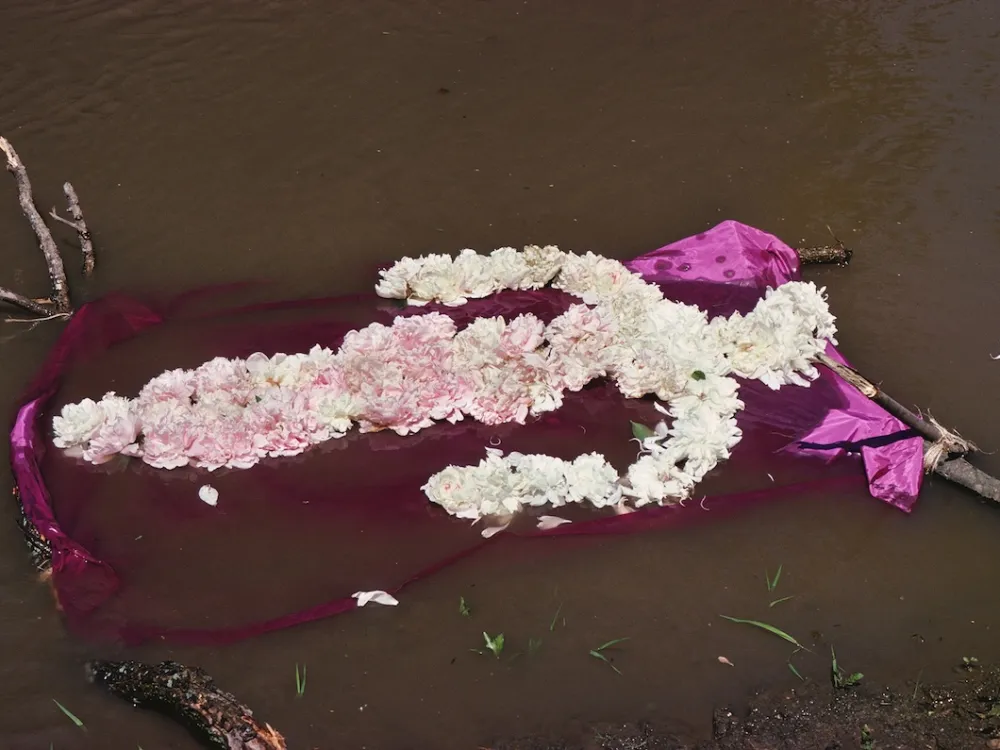
Following an acclaimed exhibition at Tate Modern in London, Ana Mendieta will be the subject of yet another super-sized show, this one staged across the pond, at the Museum of Modern Art in New York, where it will run from December 12, 2027, to April 15, 2028.
MoMA’s Mendieta show, titled simply “Ana Mendieta: A Retrospective,” will include around 200 works by the artist, an icon of the feminist art movement, a key performance artist, and a sculptor and filmmaker whose work in those mediums has only increased in popularity over the past couple decades. That makes the show the biggest Mendieta exhibition ever staged in the US, where the Cuban-born artist spent much of her short career.
Related Articles
MoMA Shells Out $200,000 for Inaugural Ambasz Prize for ‘Nature-Reconciled’ Architecture, Half of Which Will Go To Plant Trees
Zohran Mamdani Visited MoMA’s West African Modern Architecture Survey and Loved It
It’s the first major Mendieta show in the US since one staged in 2004 by curator Olga Viso for the Hirshhorn Museum and Sculpture Garden (which also visited the Whitney Museum in New York), and the first full-scale Mendieta retrospective mounted in the country since one visited the New Museum in New York in 1987, when the artist was less well-known than she is now. A survey focused solely on Mendieta’s films visited various US institutions in 2016.
But where past Mendieta shows have largely been thematic or centered around her output in a specific medium, the MoMA show is intended as a comprehensive retrospective.
Beverly Adams and Sophie Cavoulacos, the MoMA curators organizing the exhibition, said in an email to ARTnews, “First, and foremost, Ana Mendieta is a great artist, truly brilliant. Beyond making compelling images and objects, the issues that were of interest to her continue to be relevant today. Mendieta expanded many of the debates around performance, feminism, photography, and earth art in the 1970s and early 1980s. She investigated a body’s relationship with nature, with place and how an artist can explore a single idea through different mediums.”
One goal of the show, they said, is to demonstrate that Mendieta’s work in many mediums allowed her to translate and retranslate ideas. “She would craft how her remote environmental sculptures would be experienced in film and photographs,” the curators wrote. “Throughout the show, we are interested in elevating Mendieta’s process and how the different mediums she worked with resonate with each other.”
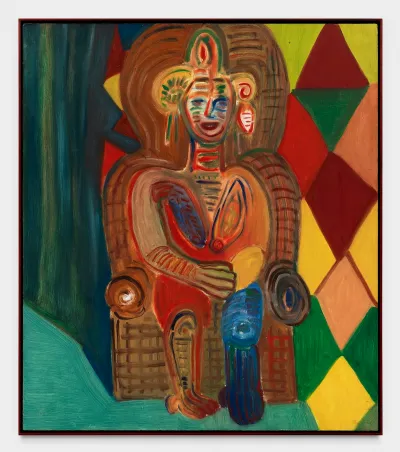
By way of example, the curators cited Mendieta’s paintings made while she was a student at the University of Iowa. These works have never before been shown in the US, the curators said, and they are “a point of departure for what was to follow.”
Much of Mendieta’s work dealt with the female body, which she explored as a site of violence, a vessel for the spirit world, and a parallel for nature and the environment. During the 1970s, she built up an impressive, and occasionally transgressive, oeuvre that touched on topics such as rape and gendered power dynamics—subjects that many mainstream museums generally would not feature in their galleries when she made these pieces. Concurrently, she explored diasporic identity, a topic that would continue to appear in her works through the mid-’80s.
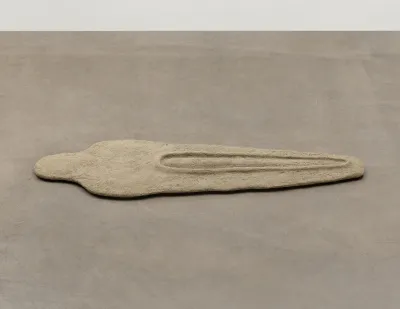
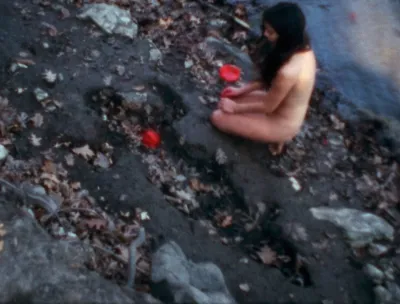
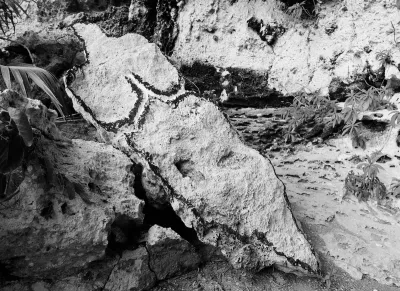
Her most famous works remain the ones in her “Silueta” series (1973–80), for which she created the silhouettes of female forms in nature. To create the early works in the series, Mendieta pressed her body into landscapes across Mexico and Iowa, then used mud, sand, fire, and flowers to record her impression, and finally documented what was left behind with her camera. She would go on to make sculptures that recall these silhouettes; they were produced at roughly the scale of her body.
Among Adams’s recent shows for MoMA was a 2025 Wifredo Lam retrospective that placed an emphasis on the role that the artist’s Cuban identity played in his work. The Mendieta show will seemingly function somewhat differently.
“Mendieta was born in Cuba, but lived the majority of her life in the United States and identified as someone coming from both of these cultures,” Adams and Cavoulacos said in their joint statement. “She went to art school in Iowa and moved to New York where she bridged different communities. She was initially propelled to make art by her exile and displacement from Cuba, but her work transcended the idea of nation-based identity.”
Mendieta’s death at the age of 36 in 1985, caused by falling from the window of the New York apartment she shared with her partner, the sculptor Carl Andre, has long troubled the telling of her story for curators, art historians, and fans alike. Andre was tried for murder and was subsequently acquitted in 1988. Andre’s death at the age of 88 in 2024 spurred newfound interest in the circumstances of Mendieta’s death, which was the subject of a podcast by the curator Helen Molesworth two years earlier.
Mendieta’s estate, which will lend works to the MoMA retrospective, has attempted to discourage reading the artist through the lens of her death. Raquel Cecilia Mendieta, the artist’s goddaughter and the manager of the estate, asked in 2024, in the New York Times: “How many times does she have to fall?” According to the New Yorker, ahead of the Tate Modern retrospective, Mendieta’s estate began circulating a document called “FACT SHEET” that asserts that the artist’s death is “not remotely related to how she created her art, nor was her art predestined or shaped by her death in any way, shape or form.”
Tate Modern’s current retrospective omits mention of Mendieta’s death, which led critic Eliza Goodpasture to write, in her Art in America review: “This exhibition is a proposition: What does Mendieta’s work become if we allow it to stand on its own?”
Asked whether Mendieta’s death would be explored in MoMA’s exhibition, Adams and Cavoulacos said, “Our role as curators organizing a comprehensive retrospective is to focus on the artist’s career and celebrate her immense contributions to art history.”